

Introduction
Bitcoin mining is the process of verifying and adding new transactions to the blockchain ledger in order to receive a reward. It is a decentralized system that allows anyone with an internet connection and the right hardware to participate in the network. As a result, all participants can benefit from the security and transparency of the blockchain.
In this article, we will explore what Bitcoin mining is, how it works, and the key terms and concepts associated with it. We will also discuss the benefits and challenges faced by miners as well as provide a step-by-step guide to getting started with mining.
A Step-By-Step Guide to Bitcoin Mining for Beginners
If you are new to Bitcoin mining, the following guide will provide you with the information you need to get started.
Setting Up Your Mining Rig
The first step in becoming a miner is to set up your mining rig. This includes purchasing the necessary hardware and software to start mining. You will need to purchase a specialized computer, known as an ASIC miner, and install the necessary software on it.
Choosing a Mining Pool
Once your mining rig is set up, the next step is to choose a mining pool. A mining pool is a group of miners who pool their computing power together in order to increase their chances of earning rewards. By joining a mining pool, you can increase your chances of earning rewards and decrease the time it takes to generate blocks.
Downloading and Installing Software
Once you have chosen a mining pool, you will need to download and install the necessary software. This includes a Bitcoin wallet and a mining program. The wallet is necessary for storing your mined coins and the mining program allows you to connect to the mining pool and start mining.
Running the Miner
Once you have everything set up, you can start running the miner. You will be able to monitor the progress of your mining as well as adjust settings such as the amount of power used. You can also set up automated payments so that you are paid out in regular intervals.

Explaining Bitcoin Mining: What You Need to Know
Before diving into the specifics of how Bitcoin mining works, let’s take a look at some of the key terms and concepts associated with the process.
The Blockchain and Mining Rewards
The blockchain is a public ledger that records all Bitcoin transactions. Miners are responsible for confirming and verifying these transactions, and in exchange for doing so, they are rewarded with Bitcoin. This process is known as mining.
The Difficulty of Mining
Mining is not a simple task. It requires considerable computing power and resources in order to be successful. As more miners join the network, the difficulty of mining increases, making it more difficult to earn rewards.
Types of Bitcoin Miners
There are two types of Bitcoin miners: solo miners and pooled miners. Solo miners use their own computing power to mine and compete with other miners for rewards. Pooled miners work together in groups in order to increase their chances of earning rewards.
Bitcoin Mining 101: How Does it Work?
Now that we have a basic understanding of the terms and concepts associated with Bitcoin mining, let’s take a closer look at how the process actually works.
Overview of the Mining Process
The process of Bitcoin mining involves verifying and adding new transactions to the blockchain ledger. Miners use specialized hardware to solve complex mathematical problems in order to generate blocks, which are then added to the blockchain. In exchange for their efforts, miners are rewarded with newly created Bitcoin.
Generating Blocks
The first step in the mining process is to generate blocks. These blocks are created by solving cryptographic puzzles, which require significant amounts of computing power. Once a block is generated, it is added to the blockchain and the miner is rewarded with newly created Bitcoin.
Solving Cryptographic Puzzles
Cryptographic puzzles are complex mathematical problems that must be solved in order to generate blocks. Miners use specialized hardware to solve these puzzles, which require significant amounts of computing power. The difficulty of these puzzles increases as more miners join the network, making it harder to earn rewards.
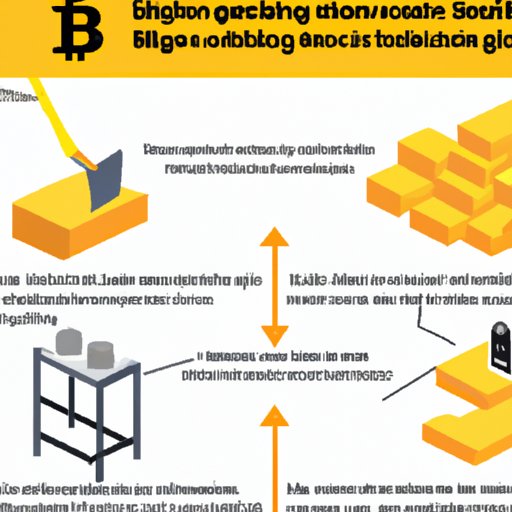
Demystifying Bitcoin Mining: An Easy to Understand Guide
Bitcoin mining can seem intimidating, but with the right knowledge, anyone can understand the basics of how it works. Here’s a look at some of the key terms and concepts associated with Bitcoin mining.
Key Terms and Concepts
Before diving into the specifics of Bitcoin mining, it is important to understand some of the key terms and concepts associated with the process. These include the blockchain, mining rewards, difficulty of mining, and types of miners.
Security and Privacy Considerations
When mining Bitcoin, it is important to consider the security and privacy implications of the process. Miners must ensure that their computers are secure and their data is safe from malicious actors. They should also take steps to protect their privacy, such as using a VPN or Tor to mask their IP address.

A Comprehensive Guide on Bitcoin Mining for Beginners
Now that you have a better understanding of the basics of Bitcoin mining, let’s take a look at some of the benefits and challenges associated with the process.
Differences Between Traditional and Cryptocurrency Mining
Traditional mining involves extracting valuable minerals from the ground, while cryptocurrency mining involves verifying and adding new transactions to the blockchain. While traditional mining requires physical resources, cryptocurrency mining requires computing power and resources.
Benefits of Bitcoin Mining
Bitcoin mining has many benefits, including increased security and transparency of the blockchain, financial incentives for miners, and decentralization of the network. Additionally, miners can be rewarded with newly created Bitcoin, providing them with an additional source of income.
Challenges Faced by Miners
Miners face several challenges when mining Bitcoin. These include the increasing difficulty of mining, competition from other miners, and the cost of setting up and maintaining a mining rig. Additionally, Bitcoin prices can be volatile, making it difficult to predict potential earnings.
Bitcoin Mining Basics: All You Need to Know
Before you jump into Bitcoin mining, there are a few key concepts you should understand. Here’s a look at some of the most important terms and concepts associated with Bitcoin mining.
What is a Mining Rig?
A mining rig is a specialized computer designed specifically for mining Bitcoin. It contains powerful processors and graphics cards that are used to solve complex cryptographic puzzles in order to generate blocks and earn rewards.
What is a Hash?
A hash is a unique identifier created by a cryptographic algorithm. It is used to verify transactions on the blockchain and to generate new blocks. Miners use their computing power to generate hashes, which are then compared to the target hash in order to verify transactions.
What is a Block Reward?
A block reward is a reward given to miners who successfully generate a new block on the blockchain. The reward is usually a fixed amount of newly created Bitcoin, but it can also include transaction fees from the transactions included in the block.
A Simple Explanation of Bitcoin Mining for the Non-Tech Savvy
Bitcoin mining can seem like a complicated and intimidating process, especially if you are new to the world of cryptocurrencies. Here’s a look at some of the basics of Bitcoin mining and how it works.
What is Bitcoin Mining?
Bitcoin mining is the process of verifying and adding new transactions to the blockchain ledger in order to receive a reward. Miners use specialized hardware to solve complex cryptographic puzzles in order to generate blocks, which are then added to the blockchain. In exchange for their efforts, miners are rewarded with newly created Bitcoin.
How Does Bitcoin Mining Work?
The process of Bitcoin mining involves verifying and adding new transactions to the blockchain. Miners use specialized hardware to solve complex mathematical problems in order to generate blocks, which are then added to the blockchain. In exchange for their efforts, miners are rewarded with newly created Bitcoin.
What Are the Benefits of Bitcoin Mining?
Bitcoin mining has several benefits, including increased security and transparency of the blockchain, financial incentives for miners, and decentralization of the network. Additionally, miners can be rewarded with newly created Bitcoin, providing them with an additional source of income.
Conclusion
Bitcoin mining is a complex process that requires specialized hardware and resources. In this article, we explored what Bitcoin mining is, how it works, and the key terms and concepts associated with it. We also discussed the benefits and challenges faced by miners as well as provided a step-by-step guide to getting started with mining.
Summary of Bitcoin Mining
Bitcoin mining is the process of verifying and adding new transactions to the blockchain ledger in order to receive a reward. Miners use specialized hardware to solve complex mathematical problems in order to generate blocks, which are then added to the blockchain. In exchange for their efforts, miners are rewarded with newly created Bitcoin.
Final Thoughts on Bitcoin Mining
Bitcoin mining is an intricate process that requires specialized knowledge and resources. However, with the right information and guidance, anyone can learn the basics of how it works and get started with mining. With the right approach, Bitcoin mining can be a lucrative way to make money and benefit from the advantages of the blockchain.
(Note: Is this article not meeting your expectations? Do you have knowledge or insights to share? Unlock new opportunities and expand your reach by joining our authors team. Click Registration to join us and share your expertise with our readers.)