
Introduction
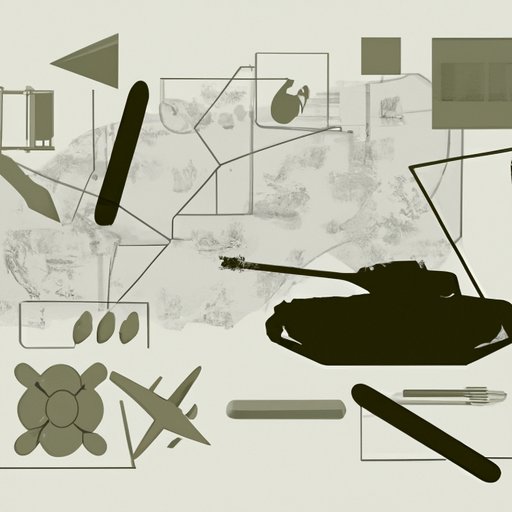
Industrial innovation has had a profound impact on the military. It has enabled technological advances that have drastically changed the way wars are fought and won. From traditional methods to modern techniques, the military has been able to equip itself with the latest technologies and tactics to ensure victory. With the advent of industrialization, the military has been able to leverage new weapons and equipment to improve operational effectiveness and increase its efficiency.
Analyzing Changes in Military Technology over Time
Throughout history, military tactics and strategies have evolved in response to changing technologies. The introduction of gunpowder, for example, revolutionized the art of warfare. As firearms became more advanced, the focus shifted from hand-to-hand combat to ranged attacks. This shift necessitated a change in tactics, as soldiers now had to consider the range of their weapons when engaging in battle.
In the 20th century, the introduction of new technologies such as tanks and aircraft further changed the nature of warfare. Tanks provided a mobile platform for infantry forces, allowing them to quickly move across terrain and engage in battles at greater distances. Aircraft enabled militaries to launch aerial assaults and provided strategic advantages in reconnaissance and surveillance. These technological advances allowed militaries to outmaneuver their enemies and gain a decisive edge in combat.
Examining the Impact of Industrial Innovation on Military Tactics
The development of new technologies has enabled militaries to employ innovative tactics and strategies. For example, the use of submarines during World War II enabled navies to launch surprise attacks on enemy vessels. Similarly, the invention of the tank allowed militaries to launch blitzkrieg attacks on their opponents, overwhelming them with superior firepower. In addition, the use of radar and other electronic devices has enabled militaries to detect enemy movements and plan their operations accordingly.
In the 21st century, militaries are leveraging artificial intelligence (AI) and unmanned systems to gain an edge in combat. AI can be used to process large amounts of data quickly and accurately, enabling militaries to make better decisions in the field. Unmanned systems such as drones can be used for reconnaissance and surveillance purposes, providing strategic advantages for militaries. Additionally, unmanned systems can be used to conduct precision strikes, allowing militaries to target specific targets with minimal collateral damage.
Exploring the Benefits of Industrialization for Military Efficiency
Industrialization has also enabled militaries to become more efficient by increasing their production capabilities. By producing weapons and equipment in bulk, militaries can quickly deploy resources to the battlefield. This allows them to respond more quickly to changing situations and react swiftly to any threats they may face. Additionally, industrialization has enabled militaries to produce specialized weapons and equipment, allowing them to tailor their forces to specific tasks.
Industrialization has also enabled militaries to reduce costs and streamline their operations. By using mass production techniques, militaries can manufacture weapons and equipment at a fraction of the cost of traditional methods. This allows them to allocate their resources more effectively, ensuring that their forces remain well-equipped and ready for any challenge.
Investigating the Role of Industrialization in Warfare
Industrialization has played a major role in the evolution of warfare. By developing weapons and equipment specifically designed for military use, it has enabled militaries to become more effective and efficient. In addition, industrialization has enabled militaries to produce resources in large quantities, allowing them to quickly deploy forces to the battlefield. Finally, industrialization has enabled militaries to develop specialized weapons and equipment, allowing them to customize their forces to specific tasks.
According to Dr. David S. Alberts, a research professor at the U.S. Army War College, “Industrialization has been a driving force behind the transformation of warfare since the beginning of the industrial age. It has enabled militaries to produce weapons and equipment in large quantities, allowing them to quickly deploy forces to the battlefield and respond to changing situations.”
Conclusion
Industrialization has had a profound impact on the military, enabling technological advances that have drastically changed the way wars are fought and won. From traditional methods to modern techniques, the military has been able to equip itself with the latest technologies and tactics to ensure victory. Additionally, industrialization has enabled militaries to become more efficient, reducing costs and streamlining their operations.
Overall, industrial innovation has been instrumental in transforming the military. It has enabled militaries to develop new weapons and equipment, as well as improved tactics and strategies. By leveraging the power of industrialization, militaries have been able to gain a decisive edge in combat and ensure victory.
(Note: Is this article not meeting your expectations? Do you have knowledge or insights to share? Unlock new opportunities and expand your reach by joining our authors team. Click Registration to join us and share your expertise with our readers.)